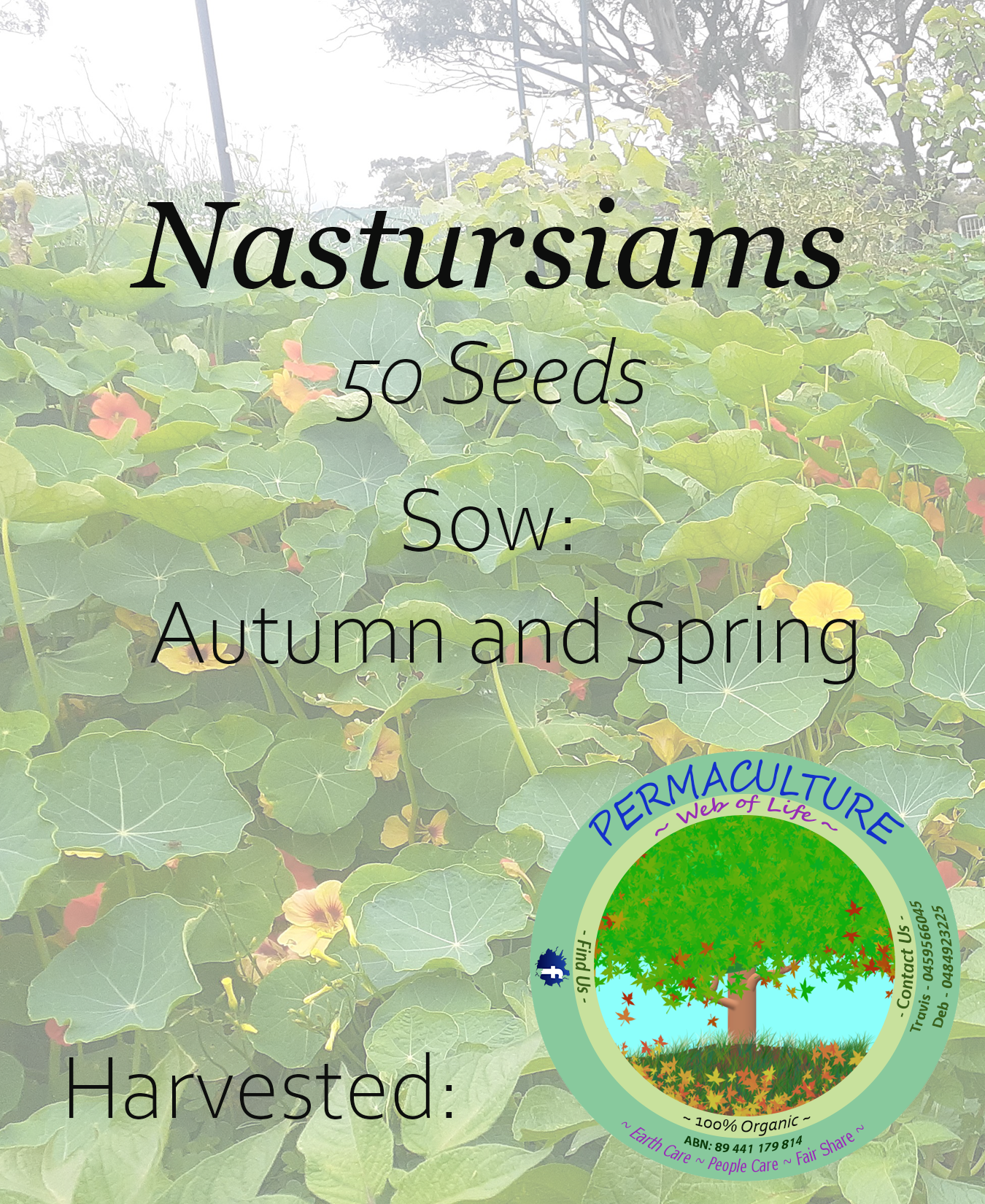
Nasturtiums (Tropaeolum majus) 50 Seeds
Description
History Andean Origins: Native to the Andes Mountains of South America (primarily Peru and Mexico), nasturtiums were cultivated by the Incas for both food and medicine long before European contact. European Introduction: Spanish conquistadors brought seeds to Europe in the late 15th and 16th centuries. They were initially called "Indian Cress" due to their peppery taste similar to watercress. Royal & Artistic Popularity: They became fashionable in Europe after being planted in the gardens of Louis XIV at Versailles. Famous figures like Thomas Jefferson and the painter Claude Monet were also known to be fond of growing them. War-Time Use: During World War II, the pungent seeds were often dried and ground as a substitute for black pepper, which was difficult to import. Growing Spaces Greenhouses Growing Spaces Greenhouses +6 Propagation Nasturtiums are among the easiest plants to grow, often thriving better in "poor" soil than in highly fertilised ground. Growing Spaces Greenhouses Growing Spaces Greenhouses Seeds: Most gardeners sow seeds directly outdoors after the last frost. They should be planted about 1.5–2 cm deep, as they require darkness to germinate. Cuttings: They can also be propagated via stem cuttings. Simply place a 10–15 cm cutting with several nodes into a glass of water; roots typically develop within a few weeks, after which they can be transplanted into soil. Self-Seeding: In many climates, nasturtiums will naturally drop seeds at the end of the season, essentially "self-propagating" for the following year. Growing Spaces Greenhouses Growing Spaces Greenhouses +3 Medicinal Uses All aerial parts (leaves, flowers, and seeds) contain beneficial compounds like vitamin C, lutein, and glucosinolates. Plantsnap Plantsnap +1 Natural Antibiotic: Nasturtiums contain benzyl isothiocyanate, which has potent antibacterial and antifungal properties. In Germany, they are sometimes prescribed alongside horseradish as a herbal antibiotic for urinary tract infections (UTIs) and bronchitis. Respiratory Support: Used traditionally as an expectorant, nasturtium tea or infusions can help clear mucus from the lungs and soothe sore throats. Skin & Hair Care: Topically, nasturtium extracts or poultices are used to treat minor cuts, scrapes, and skin irritations. Some traditions also use it as a scalp tonic to stimulate blood flow and combat hair loss or dandruff. Immune & Eye Health: Their high vitamin C content historically made them a remedy for scurvy, while their exceptionally high levels of lutein support eye health and protect against oxidative stress.
What you get
Nasturtiums (Tropaeolum majus) 50 Seeds
Free mystery seed pack with every order.
One bonus Permaculture Web of Life seed pack per order, where seed shipping is permitted.
How to grow
- Sow in spring after the last frost, or in autumn where winters stay mild and frost-free. Choose a sunny spot with well-drained soil. Very rich soil tends to favour leaves over flowers.
- Direct-sow about 2 cm deep where the plants will grow. Thin crowded seedlings to about 30 cm apart and water while they establish.
- Grow in a border or a pot with drainage. A trailing variety can spill over the edge of a pot or basket.
$3.75
Customer reviews
No reviews yet.